


In America, women make up more than half the population. Worldwide, women are expected to outnumber men within the next fifty years - and every issue we face is one that affects us all. Whether it's the environment, health, our children, politics or the arts, there's a women's perspective, and 51% is a show dedicated to that viewpoint.
Host Jesse King talks to experts in their field for a wide-ranging, entertaining discussion of issues that not only fall into the traditional “women’s issues” category, but topics that concern all human beings and citizens of the global community. 51% highlights a wide range of women from Kathy Valentine of the Go-Go’s, author and historian Amy Teitel on spaceflight and Supreme Court Justice Ruth Bader Ginsburg on her history and decision to enter law school.
Tune to 51% weekly throughout the U. S. on public and community radio stations, some ABC Radio Network stations, Armed Forces Radio stations around the world and on the internet.
Twitter: @51PercentRadio
Instagram: @51percentradio
Facebook: @51percentradio
For distribution information please fill out the Carriage Form and send to Tina Renick at trenick@wamc.org.
-
 On the latest 51%, we speak with sociologist Gretchen Sisson about her book Relinquished: The Politics of Adoption and the Privilege of American Motherhood. Sisson studies the relationship between abortion and adoption in the U.S., and is part of a team of researchers for "The Turnaway Study" at the University of California, San Francisco. In Relinquished, Sisson compiles a decade's worth of interviews with women who gave their newborns up for adoption through a private adoption agency. In unpacking how some agencies pressure (and rely on) struggling moms to relinquish their children, Sisson pushes back on the idea that adoption is an ethical alternative to abortion, and questions whether it's really a choice at all.Encore Episode.
 -
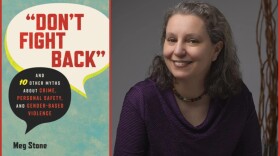 On this week’s 51%, we speak with Meg Stone, violence prevention expert and executive director of IMPACT Boston, about her upcoming book “Don’t Fight Back” And 10 Other Myths About Crime, Personal Safety, and Gender-Based Violence. Stone says a lot of common “safety tips” aimed at protecting women from violence aren’t actually based on quality research and reinforce the power structures that enable abusers in the first place. “Don’t Fight Back” addresses some of the most common myths and equips women with personal safety advice that doesn’t encourage them to make their lives small or accept the status quo.
 -
 On this week’s 51%, WAMC’s Sarah LaDuke speaks with actress and comedian Cecily Strong about her role in the new off-Broadway production of What Happened Was… in New York City. We also chat with writer Lori Carlson-Hijuelos, wife of the late Pulitzer Prize-winning author Oscar Hijuelos, about how they supported and pushed each other creatively during their 15-year marriage. WAMC’s Sajina Shrestha also meets an up-and-coming Albany, New York band showcasing the softer center of the hardcore rock scene.
 -
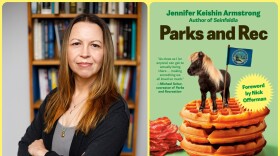 On this week’s 51%, WAMC’s Sarah LaDuke learns about everyone’s favorite comfort show, Parks and Recreation, with pop-culture writer and historian Jennifer Keishin Armstrong. “Parks and Rec” ran on NBC from 2009-2015, capitalizing on the success of The Office and a sense of political optimism following the election of then-President Barack Obama. It brought us Little Sebastian and Galentine’s Day — but it was also always on the verge of cancellation. Keishin Armstrong’s new book, Parks and Rec: The Underdog TV Show that Lit’rally Inspired a Vision for a Better America, dives into the program’s history and what it means to viewers today.
 -
 On this week’s 51%, we recognize Sexual Assault Awareness Month and speak with the head of the Texas Advocacy Project, an organization offering legal support and safety planning for survivors of dating and domestic violence, sexual assault, child abuse, and human trafficking. CEO Heather Bellino says it is critical for survivors to know their rights and have access to support that still allows them to take the lead on how they want to move forward. WAMC’s Josh Landes also details a bill in Massachusetts aimed at closing loopholes around age of consent that currently shield teachers from facing legal consequences for sexual misconduct with students in their care.
 -
 The Supreme Court has struck down a ban on conversion therapy in Colorado, deciding the law violated the First Amendment protecting free speech. On this week’s 51%, we chat with Albany Law School’s Vin Bonventre about why the Supreme Court ruled the way it did, and what this means for similar bans in other states, including New York. WAMC’s Elias Guerra also speaks with a woman working to start the first Black trans-owned bookstore in New York’s Hudson Valley.
 -
 It wasn't until the passage of the Equal Credit Opportunity Act in 1974 that women gained the right to open bank accounts, credit cards, and loans in their own names, without a male co-signer. On this week's 51%, we speak with Kathleen Godfrey, CEO of Godfrey Financial Associates, about how women's financial independence has evolved over the past 50-plus years, and what women can do now to secure themselves for the future. We also meet the new head of the Susan B. Anthony Museum & House in Rochester, New York.
 -
 On this week's 51%, we recognize Endometriosis Awareness Month and speak with Dr. Gabriela Aguilar, medical director of Planned Parenthood of Greater New York. Endometriosis is a painful and complex inflammatory disease impacting roughly 1 in 10 women worldwide. Despite how common it is, very little is still known about endometriosis, and too often patients report years of pain before getting an official diagnosis. Aguilar is a board-certified OB/GYN and complex family planning specialist in New York City.
 -
 On this week’s 51%, we speak with author Kate Schatz about her new novel Where the Girls Were. Loosely based on her mother’s experience, Where the Girls Were tells the story of a bright teenage girl in the late 1960s who finds herself pregnant and is sent away to have the baby in secret and put it up for adoption. Schatz says secret homes for "unwed mothers" were not uncommon in the U.S. before the decision of Roe v. Wade enshrined abortion rights for (almost) the next 50 years. During the “Baby Scoop Era,” millions of unwed young mothers faced societal pressure to relinquish their newborns for adoption.
 -
 On this week's 51%, we kick off Women's History Month and preview an exhibit about Ulster County’s first elections with women voters in 1918. Women in New York won the right to vote a few years before the ratification of the 19th Amendment in 1920. The Ulster County exhibit, opening March 11 on the second floor of the county office building in Kingston, features archival voter rolls and artifacts from the county board of the elections as well as the League of Women Voters of the Mid-Hudson Region, giving a glimpse into the lives of the everyday women who jumped at the opportunity to vote.


