


Strange Universe
Sundays, 9:35 a.m.
Astronomer Bob Berman sheds light on the mysteries of space and time. Always fascinating and fun, Strange Universe will take you places you never knew existed. Learn why Betelgeuse sometimes goes weirdly dim and how after the totality in 2017 in places like Wyoming and the Carolinas, millions finally got to see a total solar eclipse.
-
 The summer solstice arrives today, if you’re hearing this on Sunday. Just before dawn, the Sun reached its most northern point in the sky, right on the border between the constellations Taurus and Gemini. It then stood directly over the legendary Tropic of Cancer.
 -
 Astronomers have been slapping their foreheads for a decade or so. It’s the internet. People who know nothing about the sky but are apparently desperate for clicks and followers keep posting misleading and even stupid astronomy stuff.
 -
 You've already seen it. We can’t help it. In the west after sunset, two brilliant "stars" grab attention because they're the brightest things in the whole sky. Venus and Jupiter. Each evening they're closer together. Now the meeting finally happens. The best conjunction of the year.
 -
 There are some things that humans never seem capable of understanding – like consciousness, and the scoring of Ice Skating competitions. But we all want to understand the universe. Toward that end, educators and journalists create analogies. But -- how good are these?
 -
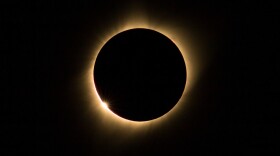 This week marks the anniversary of the total solar eclipse in which Einstein correctly predicted stars in the Pleaides cluster would shift position thanks to the curving of space. When it happened, he gained instant worldwide fame. But there remain many contradictory ideas about that great man.
 -
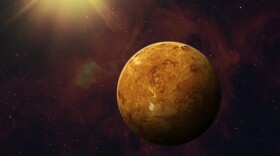 If a celestial object is the largest, smallest, brightest, or most-distant, it defines one of the edges of the cosmic envelope. Only a single entity can be “most this” or “greatest that.” Venus owns at least seven superlatives, all by itself.
 -
 What are the most basic facts of nature? They’re fascinating, yet these most fundamental realities remain strangely unknown to most people. And this has always been true.
 -
 You’ve probably never heard of PSR J1748-2446. But it’s the fastest-spinning celestial object. It’s the most extreme example of a neutron star or pulsar
 -
 When it comes to labeling the universe we’ve got a strange system. It includes classical, ancient star names and some with odd lineages: Betelgeuse and Deneb mean Sheep's Armpit and Chicken's Tail respectively, not exactly glamorous
 -
 Wonderful signs of Spring now grab our attention. But the sky is also changing.The brilliant winter constellations of Orion and his friends now appear for a final few weeks. After 10pm, they’re gone.


