


Earth Wise
Weekdays, 11:10 a.m. and 4:04 p.m.
From green business and new environmental legislation to how nature impacts our environment in ways never before considered, Earth Wise offers a look at our changing environment.
For the latest episodes, visit earthwiseradio.org.
-
 Disasters are big business. Decades ago, meteorologists at the National Oceanic and Atmospheric Administration started tracking the number of natural disasters in the US – the ones that incurred at least a billion dollars in damages. The numbers have gone up and up. FEMA used to handle 25 major disasters per year on average; in the past decade, the number is 63. FEMA’s Disaster Relief Fund averaged $3.4 billion a year in the 90’s and the early years of the new century. Now, annual spending is closer to $16 billion.
 -
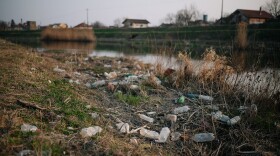 Plastic is everywhere in modern life. According to the United Nations, 474 million tons of plastic is produced every year around the world, two thirds of which is only used for a short period of time before being thrown away. Discarded plastic can persist in the environment for decades or even centuries.
 -
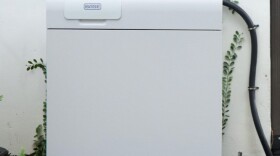 For a few decades, homeowners with solar panels on their roofs have been taking advantage of net metering, which is where excess energy from their panels is fed into the grid in return for an energy credit, reducing their power bills.
 -
 Increasingly damaging weather is the new normal and New York is having plenty of it. The New York City metro area this summer alone has seen downed power lines, submerged cars, and saw the SoHo neighborhood turn into a wading pond. As the climate changes, storms are becoming stronger and more frequent.
 -
 The sales momentum for electric cars in the U.S. has slowed as a result of the policies of the current administration, but the auto industry clearly sees that EVs are the future and the industry is paving the way for that future.
 -
 This summer, wildfire smoke has impacted the Pacific Northwest, California, the Mountain West, and the Northeast. The western states experience direct, localized smoke from ongoing blazes whereas the midwestern and eastern cities suffer from unhealthy air because of wind patterns carrying smoke from Canadian wildfires. In July, 13 states issued air quality alerts because of more than 150 wildfires burning in Quebec.
 -
 Superhot geothermal energy is a new form of geothermal energy extraction that taps into deep, dry crystalline rock that maintains temperatures that can exceed 700 degrees Fahrenheit. By pumping water into these rock formations, superheated steam can be brought up to the surface, yielding 5 to 10 times more energy than conventional geothermal sources.
 -
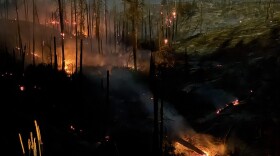 For decades, climate scientists have been warning about the effects of burning fossil fuels on global temperatures. They have been developing increasingly sophisticated climate models that simulate how the atmosphere, oceans, and land will respond under different emissions scenarios. But as the world has warmed and the effects of the warming increase, the models have not been taking into account additional sources of emissions that result from that warming.
 -
 The Great Salt Lake in Utah is the largest saltwater lake in the Western hemisphere. Nearly 80% of Utah’s population lives within the lake’s watershed and it contributes over $1.3 billion to the state’s GDP each year. It is rapidly disappearing and some estimates warn that it could collapse entirely within the next five years.
 -
 Removing carbon dioxide from the atmosphere may become an important tool for slowing climate change. Climate models from the Intergovernmental Panel on Climate Change show that limiting global warming to 1.5 degrees Celsius will require not only cutting emissions, but also removing hundreds of billions of tons of carbon dioxide already in the atmosphere.


